
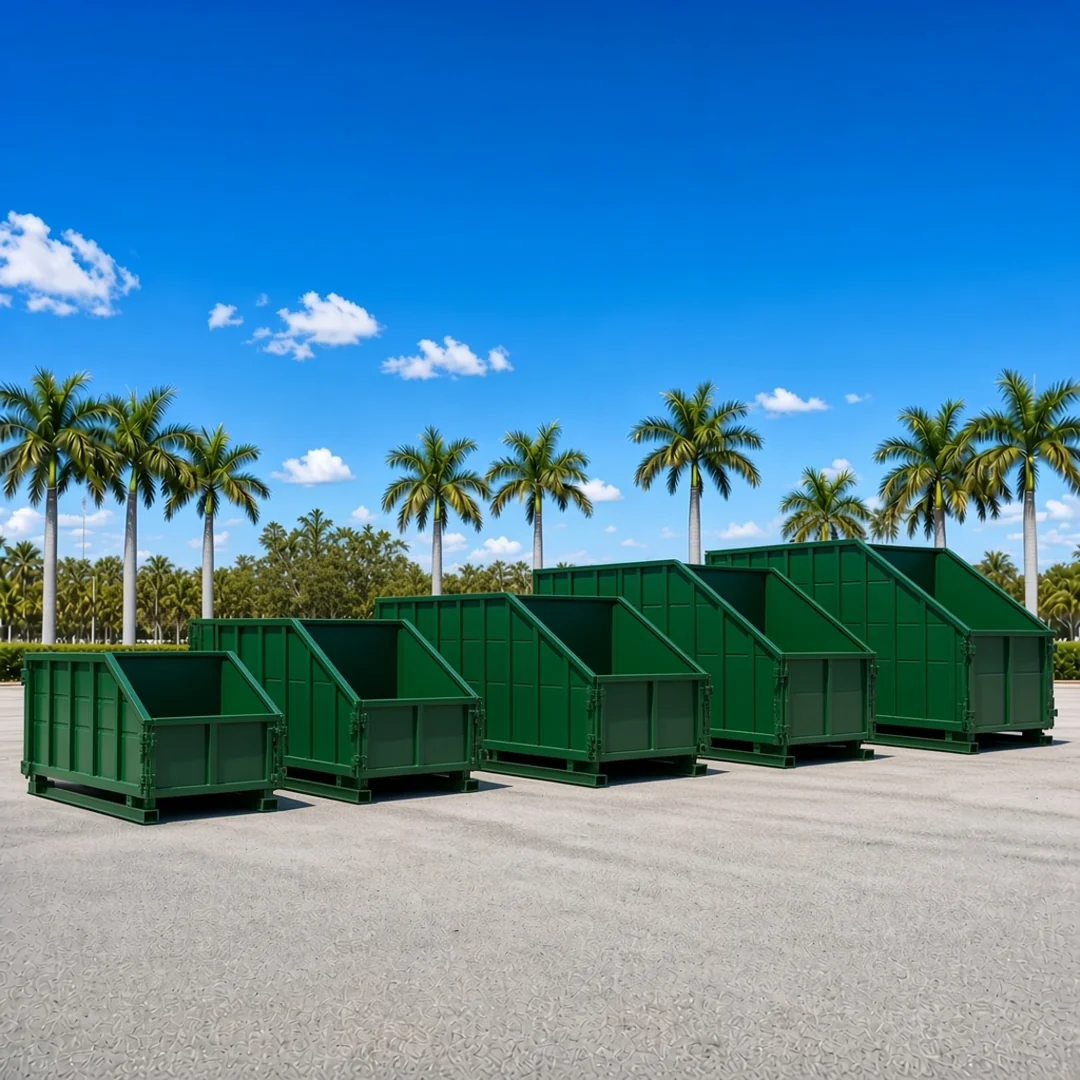
Dumpster Sizes Explained: 10, 15, 20, 30 and 40 Yard
If you are renting a roll-off dumpster for the first time, the size options can be confusing, and picking wrong costs money. This guide explains each common dumpster size in plain English: how big it is, how much it holds, what its weight limit means, and which jobs it actually fits. The short version is that you choose by the weight of your debris as much as by how much there is, and in Southwest Florida that distinction matters more than almost anywhere, because the region’s heaviest debris reaches a box’s weight limit long before the box looks full.
The Quick Answer: What the Numbers Mean
The number in a dumpster size, like “20-yard,” refers to cubic yards of volume, not weight and not length. A 20-yard dumpster holds 20 cubic yards of material. One cubic yard is a cube three feet on each side, so a pile three feet high, three feet wide and three feet deep. For a rough mental picture, one cubic yard is about three to four full-size trash bags’ worth, or roughly what fits in the bed of a standard pickup truck when heaped.
But volume alone will mislead you, because every dumpster also has a weight limit, measured in tons, and the two limits are reached at very different points depending on what you are throwing away. That is the single most important thing to understand before you choose.
Volume vs Weight: The Thing That Trips People Up
Every roll-off comes with an included weight allowance, and going over it means paying an overage charge billed per ton. Light, bulky debris fills the box on volume before it ever approaches the weight limit. Heavy, dense debris does the opposite: it reaches the weight limit when the box looks barely started.
Think of two 20-yard boxes. Fill one with old furniture, drywall and cardboard, and it will be full to the top while still well under its weight allowance. Fill the other with broken concrete, and it will hit the weight limit when it is about a third full, leaving two-thirds of the space unusable and an overage charge waiting if you add more. Same box, completely different outcome, because of what went in it.
This is why experienced haulers ask what your debris is before they recommend a size. In Southwest Florida the heavy materials that cause this are common: clay and concrete roof tile, concrete and block from driveways and seawalls, dirt and sand, and wet demolition debris. For any of those, the right answer is usually a small box filled only partway, not a big box filled to the top.
The Five Common Sizes
10-Yard Dumpster
A 10-yard box is about 12 to 14 feet long, 8 feet wide and 3.5 to 4 feet tall. It holds around 10 cubic yards, or three to four pickup-truck loads of light debris. Its real purpose is heavy debris: concrete, tile, brick and dirt, filled only partway to stay under the weight limit. Its small footprint also makes it the practical choice on a tight lot where a longer box will not fit. Full details are on the 10-yard page.
15-Yard Dumpster
A 15-yard box is about 16 feet long and holds around 15 cubic yards, or five to six pickup loads. It bridges the gap between the 10 and the 20, suiting flooring tear-outs, small roofs and single-car garage cleanouts. Not every hauler stocks a 15, so ask. See the 15-yard page.
20-Yard Dumpster
A 20-yard box is about 22 feet long and 4 to 4.5 feet tall, holding around 20 cubic yards, or six to eight pickup loads. Its low walls make it easy to load by hand, and it fits the broad middle of home projects: shingle roof replacements, multi-room remodels and full household cleanouts. It is the most-rented size in Southwest Florida and the usual default when you are unsure. See the 20-yard page.
30-Yard Dumpster
A 30-yard box is about 22 feet long but 6 feet tall, holding around 30 cubic yards, or nine to twelve pickup loads. The extra height holds the added capacity, which means loading higher, so most 30-yard jobs involve a crew. It suits whole-home renovations, new construction and big demolition where the debris is bulky but not dense. See the 30-yard page.
40-Yard Dumpster
A 40-yard box is about 22 feet long and 8 feet tall, the largest standard roll-off, holding around 40 cubic yards or twelve to sixteen pickup loads. It is built for high-volume, low-weight debris, so commercial cleanouts, build-outs and light demolition, and is rarely the right call for a home. Its weight allowance does not scale with its size, so it is the wrong box for anything dense. See the 40-yard page.
How to Match a Size to Your Job
Start by naming your debris, then pick by whichever limit it will hit first:
- Heavy and dense (concrete, tile, brick, dirt): a 10-yard box filled partway, regardless of how much there is.
- A shingle roof: a 20-yard box for a typical single-family re-roof.
- A tile roof: a 10-yard box sized by weight, because tile is three to four times heavier than shingles.
- A multi-room remodel: a 20-yard box.
- A full household or estate cleanout: a 20-yard box, or a 30-yard for a very full home.
- A whole-home gut or new construction: a 30-yard box.
- A commercial cleanout or light demolition with high volume: a 40-yard box.
- A mixed job with both light and heavy debris: split the heavy material into its own small box, and size the rest by volume.
When in doubt, describe the job to the hauler and let them size it by weight. You can also start with the dumpster size calculator, which matches a project type to a size, then confirm it on the phone.
A Note for Southwest Florida
Two local realities make the weight-versus-volume rule especially important here. First, tile roofs are common across Lee, Collier, Charlotte and Sarasota counties, and a tile tear-off needs a far smaller box than its volume suggests. Second, tight canal-front lots and older, closely-spaced neighborhoods often cannot fit a 22-foot box at all, which pushes the choice toward a 10- or 15-yard even for lighter debris. If you are working on a canal lot or an island, confirm access before you settle on a size.
Frequently Asked Questions
What is the most popular dumpster size?
How big is a cubic yard?
Why does a small dumpster cost the same weight limit problems as a big one?
Can I mix heavy and light debris in one dumpster?
Still Not Sure What Size You Need?
If you can describe your project but cannot guess the size, the dumpster size calculator will point you to a starting size, and a local company can confirm it by weight. When you are ready, call 123-456-7890 to reach a dumpster rental company serving your Southwest Florida city, or browse by city on the Locations hub.
Footer disclaimer: This site is a free service to assist homeowners in connecting with local service contractors. All contractors are independent and this site does not warrant or guarantee any work performed. It is the responsibility of the homeowner to verify that the hired contractor furnishes the necessary license and insurance required for the work being performed. All persons depicted in a photo or video are actors or models and not contractors listed on this site.
Internal links map
| Anchor | Target |
|---|---|
| 10-yard page | /10-yard-dumpster-rental/ |
| 15-yard page | /15-yard-dumpster-rental/ |
| 20-yard page | /20-yard-dumpster-rental/ |
| 30-yard page | /30-yard-dumpster-rental/ |
| 40-yard page | /40-yard-dumpster-rental/ |
| dumpster size calculator | /tools/dumpster-size-calculator/ |
| Locations hub | /locations/ |
Schema (Organization + Article + FAQPage + BreadcrumbList)
[
  {"@context":"https://schema.org","@type":"Article","headline":"Dumpster Sizes Explained: 10, 15, 20, 30 and 40 Yard","description":"A plain-English guide to dumpster sizes with dimensions, capacity, weight limits and which jobs fit each, for Southwest Florida.","author":{"@type":"Organization","name":"Florida Dumpster Directory"},"publisher":{"@type":"Organization","name":"Florida Dumpster Directory"},"mainEntityOfPage":"https://floridadumpsterdirectory.com/blog/dumpster-sizes-explained/"},
  {"@context":"https://schema.org","@type":"BreadcrumbList","itemListElement":[{"@type":"ListItem","position":1,"name":"Home","item":"https://floridadumpsterdirectory.com/"},{"@type":"ListItem","position":2,"name":"Blog","item":"https://floridadumpsterdirectory.com/blog/"},{"@type":"ListItem","position":3,"name":"Dumpster Sizes Explained","item":"https://floridadumpsterdirectory.com/blog/dumpster-sizes-explained/"}]},
  {"@context":"https://schema.org","@type":"FAQPage","mainEntity":[
    {"@type":"Question","name":"What is the most popular dumpster size?","acceptedAnswer":{"@type":"Answer","text":"The 20-yard roll-off is the most popular and most-rented size, because it fits the broad middle of home projects: roof replacements, multi-room remodels and full cleanouts. It holds about six to eight pickup-truck loads and has low walls that are easy to load by hand. The main exception is heavy debris like concrete and tile, which hits the weight limit early and goes in a smaller 10-yard box instead."}},
    {"@type":"Question","name":"How big is a cubic yard?","acceptedAnswer":{"@type":"Answer","text":"A cubic yard is a cube three feet on each side: three feet high, three feet wide and three feet deep. For a rough picture, one cubic yard is about three to four full-size trash bags' worth, or roughly a heaped standard pickup-truck bed. A 20-yard dumpster holds 20 of those, which is why it equals about six to eight pickup loads of debris."}},
    {"@type":"Question","name":"Why does a small dumpster have the same weight limit problems as a big one?","acceptedAnswer":{"@type":"Answer","text":"Because weight limits are set per box, and heavy debris reaches any box's weight limit fast. The trick is not to buy a bigger box for heavy debris, but a smaller one filled only partway. A 10-yard box filled to its fill line keeps a concrete or tile load under the weight allowance, where the same material in a 20- or 30-yard box would trigger overage charges on a container that looks nearly empty."}},
    {"@type":"Question","name":"Can I mix heavy and light debris in one dumpster?","acceptedAnswer":{"@type":"Answer","text":"You can, but the heavy material decides the weight, so a big box mostly full of light debris can still run over its weight limit if it also holds tile or concrete. The cleaner approach is to split the heavy material into its own small box sized by weight, and size the rest by volume. Tell the hauler what is in the mix so they can plan the box or boxes correctly."}}
  ]}
]