Construction Dumpster Rental in Southwest Florida, Sizing, C&D Rules and Jobsite Placement
Construction debris, framing offcuts, drywall, flooring, packaging, broken block and general jobsite waste, is its own category under Florida rules, and it comes with disposal and recycling requirements that a homeowner cleanout does not. Southwest Florida’s steady new-build and addition activity, much of it tied to post-storm rebuilding, keeps construction dumpsters in demand across Lee, Collier and Charlotte counties. Call 123-456-7890 to reach a local company that handles construction dumpsters in your city.
This page covers how to size a construction dumpster, the construction-and-demolition (C&D) disposal rules that apply in Southwest Florida, and the jobsite placement and permit points that matter on a build.
Sizing a Construction Dumpster
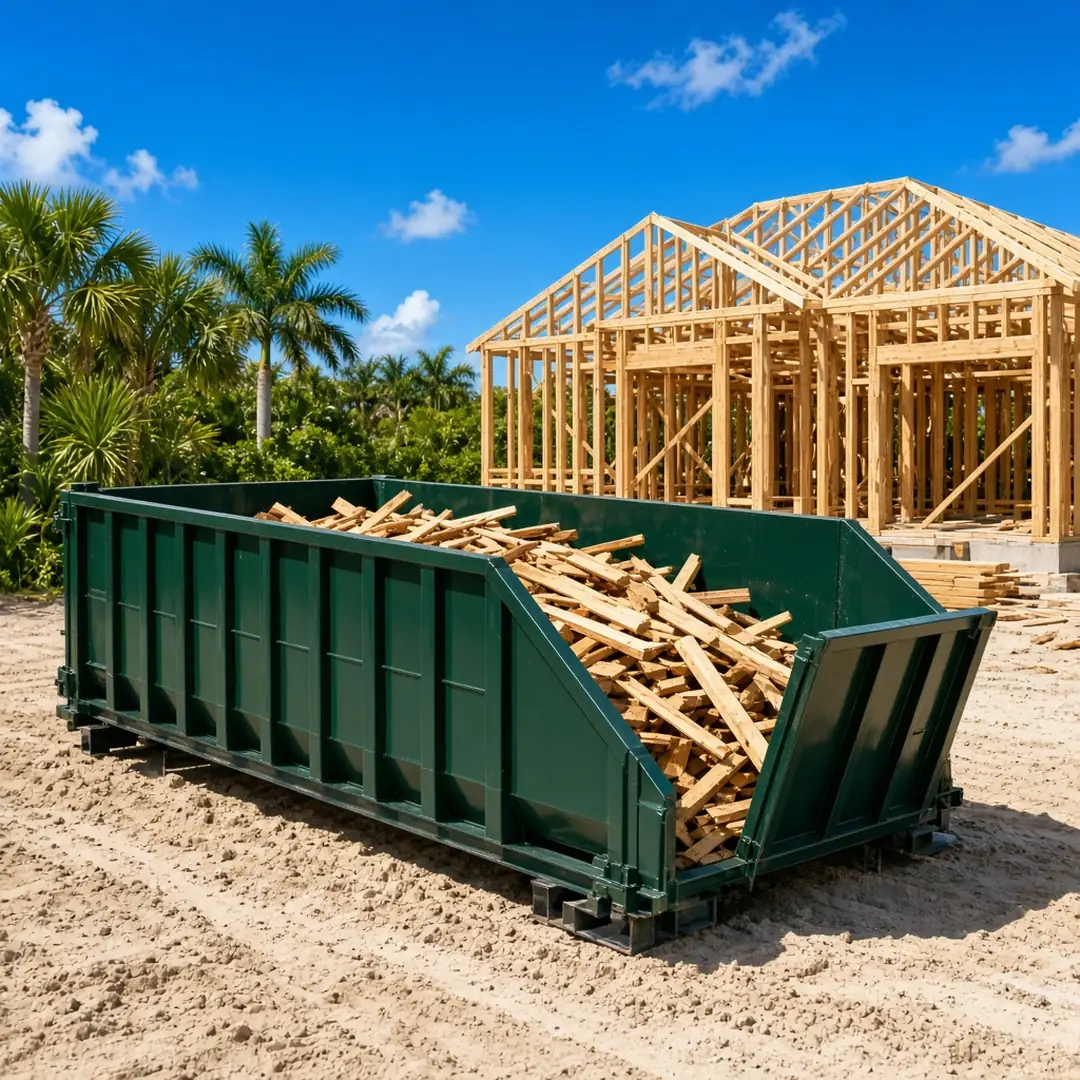
Most construction debris is bulky but mixed in weight, so sizing depends on the phase and the materials. A single addition or small new build often runs a 20-yard box; a larger new-construction job or a whole-structure phase usually calls for a 30-yard, and high-volume light debris like cardboard and framing offcuts can justify a 40-yard. The exception, as always in Southwest Florida, is dense material: broken block, concrete, mortar and tile should be split into a smaller 10-yard box filled partway, because they will blow past a big box’s weight limit. On an active site, a scheduled swap-out keeps the job moving without ordering a box bigger than any single phase needs.
C&D Debris and Florida Recycling Rules
Construction and demolition debris is regulated separately from household waste. It goes to C&D facilities, not the regular landfill stream, and some counties add recycling requirements. In Lee County, covered construction-and-demolition projects face a 50% recycling-or-reuse requirement under county ordinance, with a certification form, a rule that matters to contractors pulling permits in the county. A hauler who works construction regularly will know which facility takes your load and how the county’s requirements apply. Clean, separated loads, concrete in one box, wood in another, are easier to recycle and can be cheaper to dispose of than a mixed load, which is one reason separating heavy material pays off twice.
Jobsite Placement and Permits
On a construction site, the box needs truck access and clear overhead space, and it should sit where crews can reach it without carrying debris across the whole lot. For new construction, the placement is often on the lot itself and needs no right-of-way permit, but if the box sits in the street or public right-of-way during the build, a permit from the city or county is usually required. Confirm whether the general contractor or the property owner is responsible for the dumpster and any permit, on a managed build this is usually the GC, but on an owner-driven project it may be you.
Work is performed by independent professionals.
What to Look for in a Construction Dumpster Company
Choose a hauler who works construction and knows the local C&D facilities and county recycling rules, not just residential cleanouts. Confirm the weight allowance and overage rate, and plan the swap-out schedule for the build’s phases. Ask whether separating heavy debris into its own box lowers the overall disposal cost, since clean loads are often cheaper. Confirm who pulls any permit. On a multi-week job, confirm the rental terms. Use the directory’s review counts alongside the call.
Frequently Asked Questions
What size dumpster do I need for a construction project?
What is C&D debris?
Does Lee County require construction debris recycling?
Who is responsible for the dumpster on a construction site?
Call Now to Reach a Local Construction Dumpster Company
For a new build, addition or framing job, call 123-456-7890 to reach a local construction dumpster company in your Southwest Florida city. Compare sizes on the Dumpster Sizes hub.
Footer disclaimer: This site is a free service to assist homeowners in connecting with local service contractors. All contractors are independent and this site does not warrant or guarantee any work performed. It is the responsibility of the homeowner to verify that the hired contractor furnishes the necessary license and insurance required for the work being performed. All persons depicted in a photo or video are actors or models and not contractors listed on this site.
Internal links map
| Anchor | Target |
|---|---|
| 10-yard | /10-yard-dumpster-rental/ |
| 20-yard | /20-yard-dumpster-rental/ |
| 30-yard | /30-yard-dumpster-rental/ |
| 40-yard | /40-yard-dumpster-rental/ |
| Dumpster Sizes hub | /dumpster-sizes/ |
Schema (Organization + FAQPage + BreadcrumbList)
[
  {"@context":"https://schema.org","@type":"Organization","name":"Florida Dumpster Directory","@id":"https://floridadumpsterdirectory.com/","url":"https://floridadumpsterdirectory.com/construction-dumpster-rental/","description":"Construction dumpster rental information and local companies across Southwest Florida.","areaServed":[{"@type":"City","name":"Fort Myers"},{"@type":"City","name":"Cape Coral"},{"@type":"City","name":"Naples"},{"@type":"City","name":"Sarasota"}]},
  {"@context":"https://schema.org","@type":"BreadcrumbList","itemListElement":[{"@type":"ListItem","position":1,"name":"Home","item":"https://floridadumpsterdirectory.com/"},{"@type":"ListItem","position":2,"name":"Construction Dumpster Rental","item":"https://floridadumpsterdirectory.com/construction-dumpster-rental/"}]},
  {"@context":"https://schema.org","@type":"FAQPage","mainEntity":[
    {"@type":"Question","name":"What size dumpster do I need for a construction project?","acceptedAnswer":{"@type":"Answer","text":"It depends on the phase and the debris. A single addition or small new build often fits a 20-yard box, a larger new-construction job usually needs a 30-yard, and high-volume light debris can justify a 40-yard. Dense material like broken block, concrete and mortar should go in a smaller 10-yard box filled partway to stay under the weight limit. On an active site, scheduled swap-outs are often more efficient than one oversized box."}},
    {"@type":"Question","name":"What is C&D debris?","acceptedAnswer":{"@type":"Answer","text":"C&D stands for construction and demolition debris, the framing offcuts, drywall, flooring, concrete, block, packaging and general waste generated by building, remodeling and demolition. Florida regulates it separately from household waste, routing it to C&D facilities rather than the regular landfill. Some counties add recycling requirements, so a hauler who works construction will know the correct facility and the local rules for your load."}},
    {"@type":"Question","name":"Does Lee County require construction debris recycling?","acceptedAnswer":{"@type":"Answer","text":"Yes. In Lee County, covered construction-and-demolition projects face a 50% recycling-or-reuse requirement under county ordinance, with a certification form. This applies to qualifying projects and matters to contractors pulling permits in the county. A hauler who regularly works Lee County construction will know which approved facilities handle the load and how to meet the requirement. Separating clean materials like concrete and wood makes meeting it easier."}},
    {"@type":"Question","name":"Who is responsible for the dumpster on a construction site?","acceptedAnswer":{"@type":"Answer","text":"It depends on how the project is managed. On a build run by a general contractor, the GC is usually responsible for ordering the dumpster, placing it and pulling any permit. On an owner-driven project, that responsibility may fall to the property owner. Confirm this up front so the box, the placement and any right-of-way permit are handled by the right party before the build starts."}}
  ]}
]Call Now to Reach a Local Dumpster Company
Call 123-456-7890 to reach a local dumpster rental company in your Southwest Florida city. Compare sizes on the Dumpster Sizes hub.
Call 123-456-7890